On the modular concrete batching plant, the operator simply touches the control panel, and aggregates, cement, water, and additives begin to mix in precise proportions. In less than two minutes, one cubic meter of high-quality concrete is ready to be loaded into a transport truck and delivered to the construction site.
Current Market Status and Product Positioning of Small-Scale Concrete Batching Plants
With the continuous advancement of infrastructure construction, the demand for concrete is becoming increasingly diversified. While large-scale batching plants meet the needs of mass production, a more flexible and adaptable small-scale concrete batching plant is gradually becoming a new favorite in the market.
These devices are designed for small-scale concrete production and are mainly used in outdoor construction sites such as highways, bridges, power plants, and dam construction projects.
The industry is developing towards efficiency, energy saving, and intelligence. Small-scale batching plants, with their advantages of small footprint, high mixing efficiency, and convenient maintenance, have become the ideal choice for small and medium-sized engineering projects.
Core Parameters and Model Comparison
Small concrete batching plants come in various models to meet the needs of different-sized projects. Below is a comparison of the technical parameters of three common models:
| Parameter Type |
HZS25 |
HZS35 |
HZS50 |
| Maximum Production Rate |
25 m³/h |
35 m³/h |
50 m³/h |
| Discharge Height |
1.7-3.8 m |
2.5-3.8 m |
3.8 m |
| Working Cycle Time |
72 seconds |
72 seconds |
72 seconds |
| Total Installed Capacity |
50.25 kW |
64.4 kW |
105 kW |
| Weighing Accuracy (Aggregate) |
±2% |
±2% |
±2% |
| Weighing Accuracy (Cement/Water) |
±1% |
±1% |
±1% |
|
|
|
|
The core structure of these devices consists of a material conveyor belt, a mixing host, and a batching mechanism. Through modular design, they achieve the functions of raw material conveying, proportioning, and mixing. The equipment can be adapted to work in conjunction with dump trucks, tipper trucks, or concrete mixer trucks. The mixing host can operate independently or be integrated with other components to form a complete mixing system.
Taking the HZS35 model as an example, this concrete mixing plant has a theoretical production capacity of 35 cubic meters per hour, an overall weight of approximately 13 tons, and external dimensions of 15.2 × 9.4 × 19.2 meters. It uses a bucket elevator for material feeding.
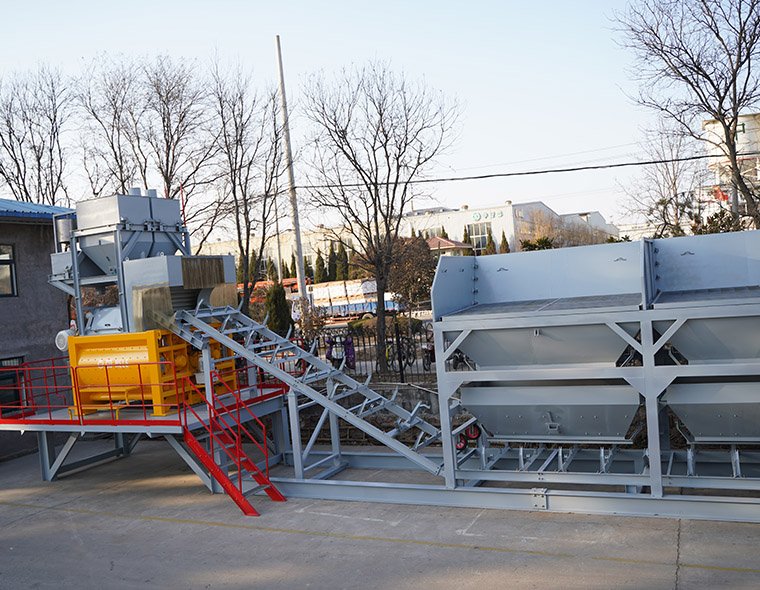
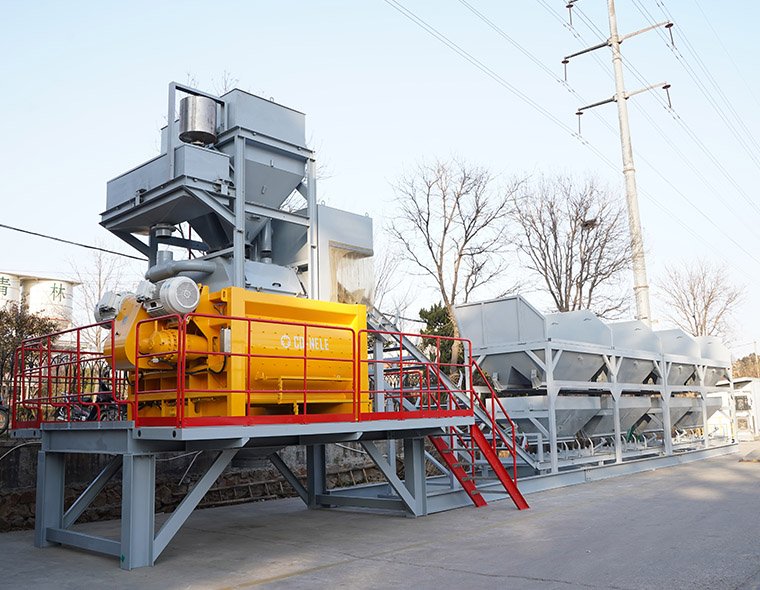
Design Features and Technical Advantages
Small concrete batching plants stand out in the competitive market due to their numerous unique design advantages. These advantages are reflected not only in production efficiency but also in adaptability and sustainability.
Flexible and efficient modular design is a core feature of modern small concrete batching plants. The equipment adopts a modular design, making installation and relocation convenient, especially suitable for projects with short construction periods and small concrete demand. All production functional units are highly integrated, significantly shortening the equipment installation and commissioning cycle.
The intelligent and precise control system is a testament to technological advancement. The latest batching plants deeply integrate AI technology, pioneering the introduction of intelligent function packages in the industry, giving the batching plant advantages such as high precision, self-diagnosis, intelligent unloading, and online monitoring. The weighing system is accurate and reliable, with aggregate weighing accuracy reaching ±2%, and cement and water weighing accuracy reaching ±1%.
Robust and durable core components ensure long-term stable operation of the equipment. The mixing host adopts a double-ribbon design, improving mixing efficiency by 15% compared to traditional designs. The shaft end sealing technology is reliable, and the liners and blades have high wear resistance. The special lifting mechanism starts and stops smoothly, the steel wire rope has a long service life, and there are multiple safety measures such as slack rope detection, over-limit protection, and anti-falling devices.
The environmentally friendly and energy-saving production concept meets modern construction requirements. The equipment adopts advanced dust removal technology, and the powder material silo uses a pulse negative pressure dust collector, resulting in dust emissions far below national standards during the production process. Noise pollution is effectively controlled, creating a green and low-carbon construction environment for customers.
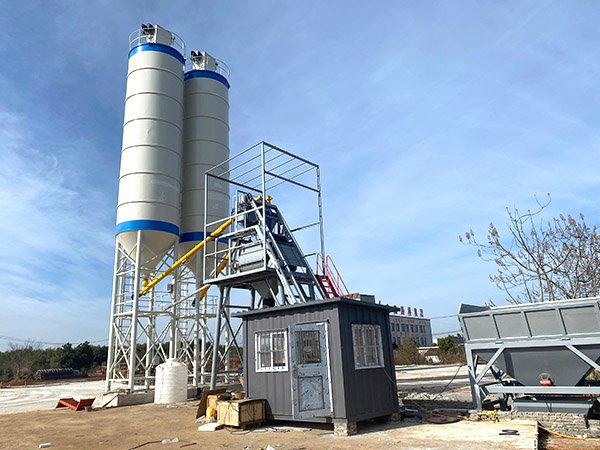
Application Scenarios and Adaptability
The flexibility of small concrete batching plants makes them suitable for a variety of engineering scenarios, from infrastructure construction in remote areas to local renovations in urban areas, where they can demonstrate their unique value.
Outdoor construction sites are the main application area for this type of equipment. In highways, bridges, power plants, and dam construction projects, small batching plants can be directly located near the construction site, reducing concrete transportation distances and improving construction efficiency. A case study from a construction site in Xinjiang shows that a mobile batching plant requires only two operators and can complete all installation and commissioning work within 6 days.
Urban construction and municipal engineering are also suitable applications. For urban renovation, new rural construction, and other work environments with limited space, small batching plants can adapt to narrow sites due to their compact design. The equipment occupies a small area, and the production process is smooth, without causing excessive disturbance to the surrounding environment. Engineering projects in challenging environments better demonstrate their value. In scenarios with strict deadlines, such as power facility construction, airport maintenance, and emergency engineering, the rapid deployment capabilities of mobile concrete batching plants are particularly important. The equipment features a foldable leg structure, facilitating transportation and storage, and further reducing logistics costs.
Procurement Guide and Brand Selection
Defining project requirements is the first step in the selection process. Choose the appropriate type of concrete mixing plant based on factors such as project scale, site conditions, and budget. Small projects may be better suited to mobile mixing plants, while projects requiring continuous supply should consider stationary mixing plants.
Assessing the manufacturer’s capabilities is crucial. Prioritize manufacturers with mature technology and comprehensive after-sales service to avoid delays caused by equipment malfunctions. CO-NELE has a professional R&D team and can customize mixing plant solutions according to customer needs, ensuring the equipment is suitable for various engineering environments.
On-site inspection and testing provide the most intuitive assessment. If possible, it is recommended to visit the production workshop to understand the equipment manufacturing process and quality control procedures.
A full life-cycle cost assessment is key to smart procurement. In addition to the purchase price, consider installation costs, operating energy consumption, maintenance costs, and potential differences in production efficiency. Some high-end brand equipment may have higher initial investment, but lower long-term operating costs.
Previous: Bentonite Granulator Machine
Next: Misturadores Intensivos de Laboratório CEL1



