


What are the differences between traditional pan mixers and modern refractory industrial mixers? This 2026 industry report compares the two across mixing principle, uniformity, energy efficiency, structural durability, and intelligent operation, helping refractory manufacturers choose the right equipment for high-precision, large-scale production.
Refractory Mixers Introduction
Refractory material production relies heavily on high-precision, stable mixing equipment to ensure the uniformity, density, and high-temperature resistance of final refractory products. As the refractory industry upgrades from traditional manual and semi-mechanical production to intelligent, high-efficiency industrial manufacturing, modern refractory industrial mixers have gradually replaced conventional traditional pan mixers as the core processing equipment for refractory castables, magnesia carbon bricks, and high-temperature resistant powders.
Although both devices serve the basic mixing function of refractory raw materials, they differ dramatically in working principles, mixing performance, energy efficiency, operational intelligence, and adaptability to complex refractory formulas. This article analyzes the core differences between traditional pan mixers and modern refractory industrial mixers, helping refractory manufacturers select cost-effective, high-performance mixing solutions for industrial-scale production.
At a Glance: Side-by-Side Comparison
| Dimension | Traditional Pan Mixer | Modern Refractory Industrial Mixer |
|---|---|---|
| Mixing Principle | Single/twin-shaft horizontal shear; fixed paddle trajectory | 3D intensive mixing; paddles + side/bottom scrapers + optional flying knives |
| Mixing Uniformity | Dead zones at pan bottom and corners; batch inconsistency | Zero dead zones; trace additive dispersion precision to 0.01% |
| Energy Efficiency | Fixed-speed motor; high idle power consumption | Variable-frequency drive; 20–35% lower energy use |
| Structural Durability | Ordinary carbon steel; rapid paddle and pan-wall wear | Wear-resistant alloy lining + epoxy coating; modular design |
| Automation Level | Manual control; fixed stirring parameters | PLC intelligent control; formula presets; auto speed regulation |
| Best-Suited Scenario | Small-batch, simple formulas, low-budget operations | High-end refractory products; large-scale automated industrial lines |
1. Fundamental Working Principle & Mixing Trajectory
The essential gap between the two mixers stems from their core mixing mechanics, which directly determines material mixing uniformity and dead zone elimination.
Traditional Pan Mixers adopt a single-shaft or twin-shaft horizontal shear mixing structure. The equipment drives fixed paddle blades to rotate in a single trajectory, relying on simple horizontal thrust and passive material flipping to complete mixing. The fixed mixing path leads to widespread mixing dead corners at the pan bottom, inner wall, and corner areas. For high-viscosity refractory materials, ultra-fine powders, and agglomeration-prone formulas such as tar-containing magnesia carbon brick raw materials, traditional pan mixers cannot achieve full material turnover, easily resulting in unmixed raw materials and inconsistent batch quality.
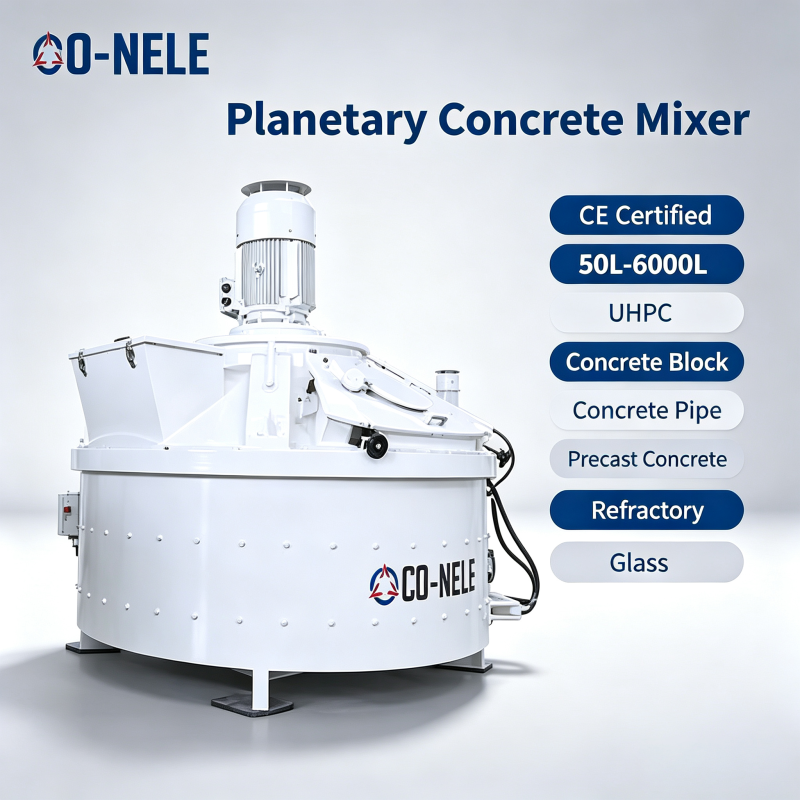
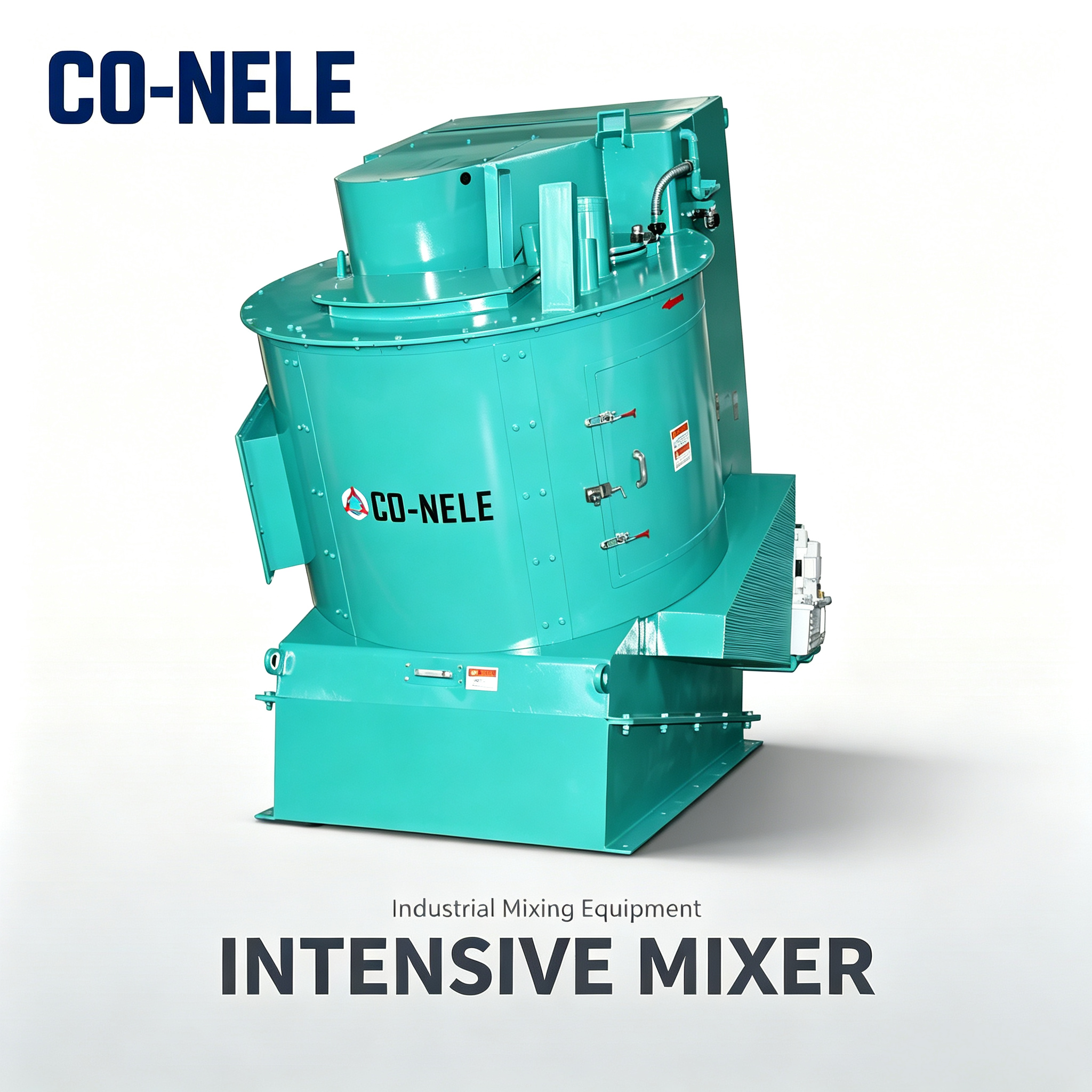
CO-NELE Refractory Industrial Mixers feature an optimized three-dimensional intensive mixing system, combining main stirring paddles, side scrapers, bottom scrapers, and optional high-speed flying knives. The multi-group structural design realizes omnidirectional material circulation, breaking fixed mixing trajectories. The synchronous operation of scraping devices thoroughly cleans residual materials on the pan wall and bottom, completely eliminating mixing dead zones. The matched high-speed flying knife module effectively crushes material agglomerates, realizing uniform dispersion of trace additives with a precision up to one ten-thousandth, fully adapting to the complex ingredient requirements of high-end refractory materials.
2. Mixing Uniformity & Product Quality Stability
Mixing uniformity is the core indicator affecting refractory product performance, directly relating to the high-temperature resistance, structural density, and service life of refractory bricks and castables.
Traditional pan mixers suffer from inherent uniformity defects. Limited by single-direction shear mixing, they require prolonged mixing time to improve uniformity, which easily causes two major problems: local overheating of materials that damages refractory binders, and excessive crushing of fine aggregate particles that destroys raw material gradation stability. In mass production, long-term use of traditional equipment leads to frequent batch quality differences, high defective rates of finished refractory products, and unstable industrial application effects.
CO-NELE Modern refractory industrial mixers achieve homogeneous mixing through forced intensive stirring and multi-dimensional material convection. The intelligent speed regulation system matches different mixing speeds according to material viscosity and particle size, avoiding over-mixing or under-mixing. Shortened mixing cycles effectively prevent material temperature rise and particle damage, ensuring consistent distribution of aggregate, powder, and binder in each batch of refractory materials. This stable mixing quality significantly improves the compactness and high-temperature structural stability of finished refractory products, meeting the strict quality standards of metallurgy, cement, and thermal power high-temperature kilns.
3. Energy Efficiency & Production Capacity
Industrial-scale refractory production puts forward high requirements for equipment energy consumption and production efficiency, where modern mixing equipment shows obvious competitive advantages.
Traditional pan mixers have low mechanical transmission efficiency and rely on long-time high-power operation to compensate for insufficient mixing capacity. Their fixed motor operation mode cannot adjust power according to material volume and formula, resulting in serious idle energy consumption. Meanwhile, low single-batch mixing efficiency limits overall production capacity, requiring more equipment and labor to meet production demands, increasing comprehensive production costs for enterprises.
CO-NELE Modern refractory industrial mixers ( CMP Planetary Mixer , CR Intensive Mixers) adopt high-efficiency variable-frequency motor systems and optimized transmission structures, reducing invalid power consumption by 20%–35% compared with traditional models. The shortened single-batch mixing cycle and continuous feeding and discharging design greatly improve unit-hour output. The modular capacity design supports flexible switching between small-batch precision production and large-scale industrial mass production, effectively lifting overall production efficiency while reducing long-term energy and labor costs for refractory manufacturers.
4. Structural Durability & Maintenance Cost
Refractory raw materials are mostly high-hardness, corrosive powders and aggregates, which wear mixing equipment severely. Equipment durability and maintenance difficulty directly affect production continuity.
Traditional pan mixers adopt ordinary carbon steel structures and unenhanced stirring components. Long-term friction with high-hardness refractory materials causes rapid wear of paddles and pan walls, leading to equipment vibration and reduced mixing accuracy. The simple sealing structure is prone to material leakage and dust overflow, with frequent component replacement and tedious daily maintenance, resulting in high long-term operation and maintenance costs.
Modern refractory industrial mixers undergo professional wear-resistant reinforcement and anti-corrosion treatment on key components. The pan body adopts epoxy coating and wear-resistant alloy lining, and the stirring paddles are made of high-strength wear-resistant materials, greatly extending equipment service life. The optimized fully sealed structure avoids dust leakage and material waste. Moreover, the integrated modular design simplifies component disassembly and replacement, reducing daily maintenance frequency and downtime loss, and improving production continuity for industrial lines.
5. Intelligent Operation & Industrial Adaptability
With the intelligent upgrade of the refractory industry, equipment automation and formula adaptability have become key evaluation indicators.
Most traditional pan mixers adopt manual control with fixed stirring parameters. Operators need to manually adjust stirring time and speed based on experience, with low automation and poor formula adaptability. They can only adapt to simple conventional refractory formulas and are unable to meet the precise mixing requirements of new-type low-cement castables, ultra-fine powder refractory materials, and composite high-temperature resistant formulas.
Modern refractory industrial mixers are equipped with intelligent PLC control panels, supporting preset formula storage, automatic speed regulation, precise timing, and quantitative feeding. The system can automatically adjust mixing parameters according to different material characteristics, realizing standardized and unmanned mixing operation. In addition, the flexible structural design supports diverse processing requirements such as wet mixing, dry mixing, and glue mixing, fully adapting to the diversified production needs of modern refractory enterprises and docking with automated assembly line production.
Summary & Industry Trend
In short, traditional pan mixers are suitable for small-scale, low-precision, and low-budget refractory processing scenarios with simple structures and low initial procurement costs. However, their inherent defects in mixing uniformity, energy efficiency, and intelligence make them unable to adapt to the high-standard development of the modern refractory industry.
Modern refractory industrial mixers achieve comprehensive upgrades in mixing principle, quality control, energy saving and efficiency, structural durability, and intelligent operation. They have become the mainstream equipment for high-end refractory production and large-scale industrial lines. As the refractory industry continues to advance in high precision, energy conservation, and intelligence, the replacement of traditional pan mixers with professional refractory industrial mixers will become an inevitable industry trend, helping manufacturing enterprises optimize production processes, improve product competitiveness, and reduce comprehensive operating costs.
Frequently Asked Questions
What is the main difference between a traditional pan mixer and a modern refractory industrial mixer?
The core difference is the mixing mechanism. Traditional pan mixers rely on single-direction horizontal shear with fixed paddle trajectories, which creates mixing dead zones at the pan bottom and corners. Modern refractory industrial mixers use a three-dimensional intensive mixing system that combines main stirring paddles, side scrapers, bottom scrapers, and optional high-speed flying knives, achieving omnidirectional material circulation and completely eliminating dead zones.
Can a traditional pan mixer produce high-end refractory castables?
Traditional pan mixers are generally not suitable for high-end refractory formulas such as low-cement castables, ultra-fine powder refractory materials, and composite high-temperature resistant mixtures. Their limited mixing uniformity and inability to precisely disperse trace additives result in inconsistent batch quality and higher defective rates. Modern refractory industrial mixers are specifically engineered to handle these complex formulas with precision.
How much energy can a modern refractory industrial mixer save?
Modern refractory industrial mixers equipped with high-efficiency variable-frequency motor systems and optimized transmission structures typically reduce energy consumption by 20% to 35% compared with traditional pan mixers. The savings come from shorter mixing cycles, adaptive power output based on actual material load, and significantly reduced idle running time.
Is upgrading from a traditional pan mixer worth the investment?
For manufacturers producing high-end refractory products, operating large-scale industrial lines, or supplying strict-quality sectors such as metallurgy, cement, and thermal power, the upgrade is strongly justified. Benefits include improved product consistency, lower long-term energy and maintenance costs, higher production capacity, and compatibility with automated production lines. For very small-scale operations with simple formulas and limited budgets, traditional pan mixers may remain cost-effective in the short term.
How do maintenance requirements compare between the two mixer types?
Traditional pan mixers require frequent component replacement due to rapid wear of carbon steel paddles and pan walls, and their simple sealing structures are prone to dust leakage and material waste. Modern refractory industrial mixers feature wear-resistant alloy linings, epoxy coatings, fully sealed structures, and modular designs that simplify component replacement, reduce daily maintenance frequency, and minimize production downtime.
What refractory products are modern industrial mixers best suited for?
Modern refractory industrial mixers (planetary mixer ,intensive mixers)are ideal for producing refractory castables, magnesia carbon bricks, high-alumina bricks, low-cement and ultra-low-cement castables, ceramic-bonded refractories, and various high-temperature resistant composite materials. Their flexible design also supports wet mixing, dry mixing, and glue mixing processes to meet diverse refractory production requirements.
Related Keywords:
Post time: Sep-01-2026


